


Cheech and Chong Bud Farm
4.713.50K Reviews
App Specs
- Version
- 1.10.4
- Updated On
- License
- Free
- Downloads
- 1,000,000+
- Developer
- LDRLY Games
- Categories
- Simulation
- Platform
- Android
Screenshots
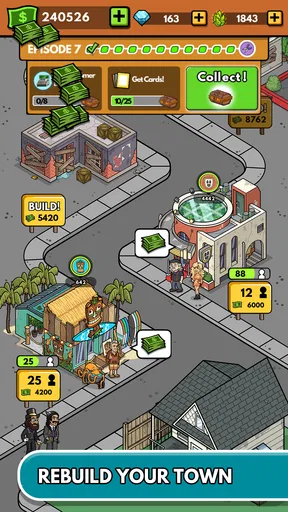


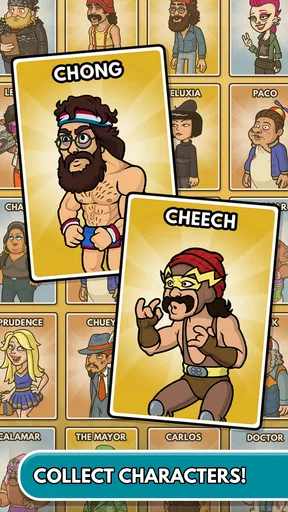


 Analysis by AppCompare
I went into Cheech and Chong Bud Farm expecting a light idle game built around a familiar comedy pairing, and that is exactly the kind of experience it delivers. It places me in charge of a growing cannabis-themed business, then asks me to make small management decisions while progress continues in the background. The tone is playful and deliberately irreverent, but the useful part is the steady rhythm of checking production, choosing what deserves attention, and deciding when convenience is worth spending money on.
This is a simulation game from LDRLY Games, available for free, with a mature 17+ content rating. It has reached over a million installs and holds a 4.7 average from roughly 114 thousand ratings, which tells me it has found a sizeable audience among players who enjoy relaxed progression more than demanding action. I would not describe it as a deep business simulator in the traditional sense, but it does offer enough planning to make the idle format feel more involved than simply tapping a reward button.
How the management decisions actually feel
The central appeal is the contrast between a business that keeps moving and a player who must decide where to focus. I can step away, return later, collect progress, and then work out which improvement should come next. That makes the game easy to fit around ordinary routines. A short visit during a coffee break can be useful, while a longer session gives me room to reorganize priorities and prepare the next stretch of growth.
The important distinction is that idle progress does not remove decision-making; it changes its timing. I am not constantly reacting to enemies or steering a character through a level. Instead, I am thinking in intervals. Should I improve the part of the operation that pays off quickly, or save resources for a more meaningful upgrade? Is it better to claim what is ready now, or leave the game running so the next return produces a larger bundle of progress? Those choices are simple, but they give the waiting period a purpose.
My most useful habit was to treat each visit as a small planning session rather than a collection routine. I first checked what had accumulated, then looked at the next available improvement and considered how many return visits it would take to afford it. That prevented me from spending everything immediately on minor conveniences. The best results come from planning around your next few sessions, not just the button in front of you.
That approach also reveals the main limitation. Players who want direct control, complicated production chains, or a large map to explore may find the management layer too gentle. The game is designed to make progress feel approachable. It does not demand the kind of detailed accounting found in a serious tycoon game, and it is not trying to replace a strategy game with a full economy. Its decisions matter most within the pace of an idle title.
Why the idle format works here
The cannabis-business theme gives the familiar idle structure a stronger personality. Instead of feeling like an anonymous factory with interchangeable icons, the setting has a recognizable comic identity. Cheech and Chong provide the framing, while the business premise gives the progression a clear direction: build up an operation, keep it moving, and enjoy the absurdity of treating it like a management project.
Worth Reading Before You Choose

EA SPORTS FC Mobile 26 Is a Bigger Football Game, but It Takes Time

Flipboard Shows What News Apps Must Do Beyond the Feed

Switching to Android Auto Means Rethinking Your Driving Routine

Google Calendar Makes a Crowded Week Easier to Manage

Ludo King Makes the Most of the Minutes Between Plans

Baby Panda World Brings Quick Play to Modern Phones, but Its Game Library Feels Busy
I found that the humor works best when I let the game remain casual. If I approached it expecting a serious simulation of the real cannabis industry, I would be disappointed. The subject is presented as a fictional entertainment setting, and the game’s mature rating matters because the theme and jokes are not aimed at children. I would be comfortable recommending it to an adult who understands that this is a playful idle game, not an educational guide or a realistic business tool.
There is also a practical advantage to the format: I do not need a long uninterrupted session to enjoy it. A commuter waiting for a train, someone taking a lunch break, or a player winding down before bed can make meaningful progress without committing to a full campaign. The trade-off is that the game can feel repetitive if I expect every visit to introduce a dramatic new challenge. Its pleasure comes from accumulation and refinement.
Choosing between quick gains and longer plans
The most satisfying decisions appear when I resist the urge to spend the moment resources become available. Immediate improvements feel good because they make the operation look more active, but saving can create a stronger position for a larger step. I would not save blindly, though. If a modest upgrade noticeably improves the next several collection cycles, buying it may be more sensible than waiting for an impressive target that takes too long to reach.
This creates a small but meaningful risk-and-reward loop. Spending early can accelerate the next return, while saving can shorten the path toward a more important milestone. The right answer changes according to how often I expect to open the game. If I know I will check again soon, a quick improvement may compound across several visits. If I am about to be away for a longer period, I prefer to prepare the operation for unattended progress rather than leave resources sitting unused.
That is one of the less obvious strengths of the game: the value of a purchase depends on your personal play schedule. A choice that is efficient for someone checking frequently may be less useful for a player who opens the app only once or twice a day. I recommend deciding how often you realistically play before judging whether a particular upgrade feels worthwhile. The idle system rewards consistency, but it does not require constant attention.
In-app purchases are part of the experience, with individual items ranging from $0.99 to $199.99. I would treat them as optional acceleration rather than a requirement for understanding the game. The free entry point is important here because it lets me test whether the loop suits my patience before spending anything. If I were buying, I would set a personal limit in advance and avoid making a purchase simply because a timer or slow stretch feels irritating.
The upper end of that purchase range is significant enough that parents should not treat the mature rating as the only thing to check. An adult player can still benefit from deciding beforehand whether purchases are off-limits, occasional, or part of the intended budget. For me, the game is more enjoyable when I view paid boosts as a convenience and not as the solution to every period of slower progress.
Adapting when the routine stops feeling efficient
Idle games can become predictable when the player follows one fixed routine, so I paid attention to how my own habits affected the experience. At first, I collected and upgraded almost automatically. Later, I started separating short-session play from long-session play. Before a brief break, I focused on actions that gave me an immediate improvement. Before leaving the game for longer, I prioritized the setup that would make the next return feel productive.
This simple change made the game feel less passive without pretending it was a complex strategy title. It also helped me notice when I was spending for emotional satisfaction rather than practical progress. A new improvement can look attractive because it is available, but availability alone does not make it the best choice. I found it useful to ask whether the purchase would change my next session, my next few sessions, or merely make the current screen look more complete.
Another helpful adjustment was accepting that not every return needs to be optimized. If I tried to squeeze maximum value from every collection, the game became a chore. The better balance was to make one or two sensible decisions, then leave. The title is strongest when it supports a relaxed habit rather than demanding constant calculation.
Compared with a conventional tycoon game, the adaptation is lighter. A traditional business simulator may ask me to manage staff, pricing, supply, demand, or detailed production constraints. Here, the emphasis is on progression choices and timing within an idle structure. Compared with a purely automatic clicker, however, the theme and upgrade decisions give my visits more direction. Players should choose it when they want a middle ground: more personality and planning than a bare tap-to-earn game, but far less pressure than a full management simulation.
What keeps the game interesting over time
The long-term appeal depends on whether watching a fictional operation expand is satisfying enough on its own. I enjoyed the early momentum because each return made the business feel more established. As the novelty settled, the game became less about surprise and more about maintaining a rhythm. That is normal for this genre, but it means the title will not satisfy someone who needs constant new mechanics or a strong narrative campaign.
I also think the comedy theme has a shelf life. It gives the game a distinct voice at the beginning, and fans of Cheech and Chong are likely to appreciate that identity more than players who are indifferent to the pairing. Over time, the management loop has to carry the experience. For me, it does that well enough for casual play, but I would not call it an endlessly demanding strategy challenge.
The current version is 1.10.4, and the game supports devices running Android 7.0 or later. That makes it accessible to many Android users, although anyone with an older device should check compatibility before planning around it. Since it is built for repeated short visits, I would also pay attention to how comfortable it feels on my particular phone: an idle game is most useful when opening it, checking progress, and making a decision are all frictionless.
A realistic everyday example is a player who opens the game after work, collects accumulated earnings, and notices that two different improvements are within reach. One offers a faster immediate return; the other requires patience but appears more valuable over several sessions. If that player has only a few minutes before dinner, the first option may be the better fit. If they are about to leave the phone overnight, preparing for the longer horizon may be wiser. The game’s depth comes from matching the decision to the day rather than following a universal best move.
Who should play and who should skip it
I would recommend this to adults who enjoy idle progression, humorous themes, and light business decisions. It suits players who like checking in several times during the day without needing to remember a complicated control scheme. It is also a good choice for someone who wants a free game that can be sampled casually before deciding whether the loop deserves more time.
I would skip it if I wanted realistic cannabis education, a detailed economic model, or hands-on action. The mature subject matter may also be unsuitable for younger players, regardless of how cartoonish the presentation feels. Likewise, anyone who dislikes waiting, recurring collection tasks, or optional purchase prompts may become frustrated sooner than someone already comfortable with idle games.
For me, the strongest alternative depends on what I want from the category. A deeper tycoon game is better when I want to balance several business systems and accept a steeper learning curve. A conventional clicker is better when I want the fastest possible loop with minimal theme. This game sits between those choices by giving the idle formula a strong cannabis-comedy setting and enough planning to make timing relevant.
One question I would ask before installing is whether the game can be enjoyed without spending. My answer is yes, provided I accept a slower pace and do not measure fun by how quickly every improvement appears. Another is whether it requires constant attention. In my experience, no: the point is to let progress build between visits, then make a few decisions when I return. The better question is whether that rhythm feels relaxing or repetitive to me.
I would also consider whether the mature rating fits the household and the player. The theme is not something I would hand to a child simply because the controls are easy. Finally, I would check the device requirement and remember that the free download includes optional purchases, so I would make the spending choice before starting rather than in the middle of an impatient moment.
My strategy verdict
After spending time with it, I see Cheech and Chong Bud Farm as a personable, low-pressure simulation game rather than a demanding empire-building masterpiece. Its best decisions are modest but useful: spend now or save, optimize for the next visit or the longer break, and decide whether a convenience is worth paying for. Those choices become more interesting when I connect them to my real schedule instead of treating every session as identical.
LDRLY Games has built a game that understands the appeal of idle progression: the operation keeps moving, the player returns to a visible sense of growth, and the theme gives the routine a little more character. The weaknesses are just as clear. The loop may feel repetitive, the strategic layer is lighter than a serious tycoon game, and the optional purchase range means I would play with a firm budget in mind.
My recommendation is therefore specific. If you want a funny adult-themed idle game that you can check in short bursts, this is an easy one to try because it is free and has a welcoming learning curve. If you need constant novelty, detailed economics, or direct action, choose a different kind of simulation. For the right player, the real pleasure is not frantic tapping but making small, timely decisions that keep the farm growing while life carries on.
With its 4.7 average and broad install base, it clearly connects with many players, but popularity should not replace personal fit. I would install it when I want a relaxed background game with a distinctive comedy identity, give it a few regular sessions, and judge it by whether planning the next return feels satisfying. For me, that is where its value lies: not in pretending to be a full business simulator, but in making a simple idle routine feel purposeful enough to revisit.
Pros
- Relaxed
- humorous theme appeals to fans of Cheech and Chong.
- Simple tap-and-manage gameplay is easy for casual players.
- Many characters and upgrades give the farm a sense of progression.
- Offline-friendly pacing makes short play sessions convenient.
- Bright cartoon graphics and playful animations add visual charm.
Cons
- Frequent timers can make progress feel slow without waiting or spending.
- In-app purchases may become tempting as upgrades and tasks get costlier.
- The humor and cannabis theme may not suit younger or sensitive audiences.
- Gameplay can become repetitive after the initial farm-building phase.
- Requires regular attention to collect resources and restart production.
FAQs for Cheech and Chong Bud Farm
What is Cheech and Chong Bud Farm?
Cheech and Chong Bud Farm is a casual idle-management game inspired by the comedy duo’s cannabis-themed universe. You build and expand a virtual growing operation, unlock new characters and locations, complete tasks, and earn resources while progressing through humorous story content. The gameplay is designed to be accessible, with automated production allowing progress even when you are not actively playing.
Is Cheech and Chong Bud Farm free to download and play?
The game is generally free to download, but it includes optional in-app purchases. These purchases can provide premium currency, boosts, special items, or faster progress, although they are not necessarily required to enjoy the main gameplay. Players should also be aware that the game may display advertisements or offer limited-time promotions, depending on the version and platform.
Does the game require an internet connection?
Cheech and Chong Bud Farm may require an active internet connection for certain features, including saving progress, synchronizing data, receiving updates, viewing advertisements, accessing events, and processing purchases. Some basic gameplay may work temporarily while offline, but the complete experience is more reliable when connected to Wi-Fi or mobile data. Availability can also vary after updates.
Is Cheech and Chong Bud Farm suitable for children?
The game is aimed primarily at mature audiences because it is based on Cheech and Chong’s cannabis-related comedy and contains references to marijuana, smoking, and adult humor. It may also include advertising and optional purchases. Parents should review the store rating, content descriptions, and device controls before allowing younger users to install it, especially if they want to restrict mature themes or spending.
Can I play Cheech and Chong Bud Farm on Android and iOS?
Cheech and Chong Bud Farm has been released for mobile devices, but compatibility can depend on the operating system version, device hardware, and regional availability. Before downloading, check the official Google Play or Apple App Store listing for the latest requirements. It is also wise to confirm whether your progress can be restored through the supported account or cloud-saving options.


